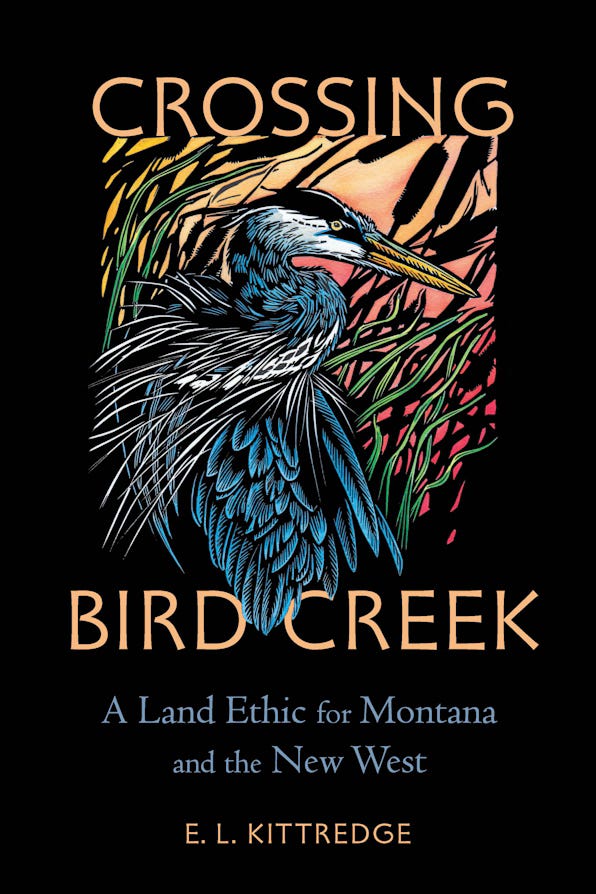
On a Sunday afternoon at The History Museum in Great Falls, Montana, with a photograph of her parents projected on the wall behind her, my mother held up her first book. I took the picture. On the wall are Dick and Frida Jones, my grandparents, sometime in the 1930s or ’40s. In front of them stands my mother, E.L. “Cindy” Kittredge, holding Crossing Bird Creek. Behind the camera is me. One generation is looking at another, standing in front of a third.
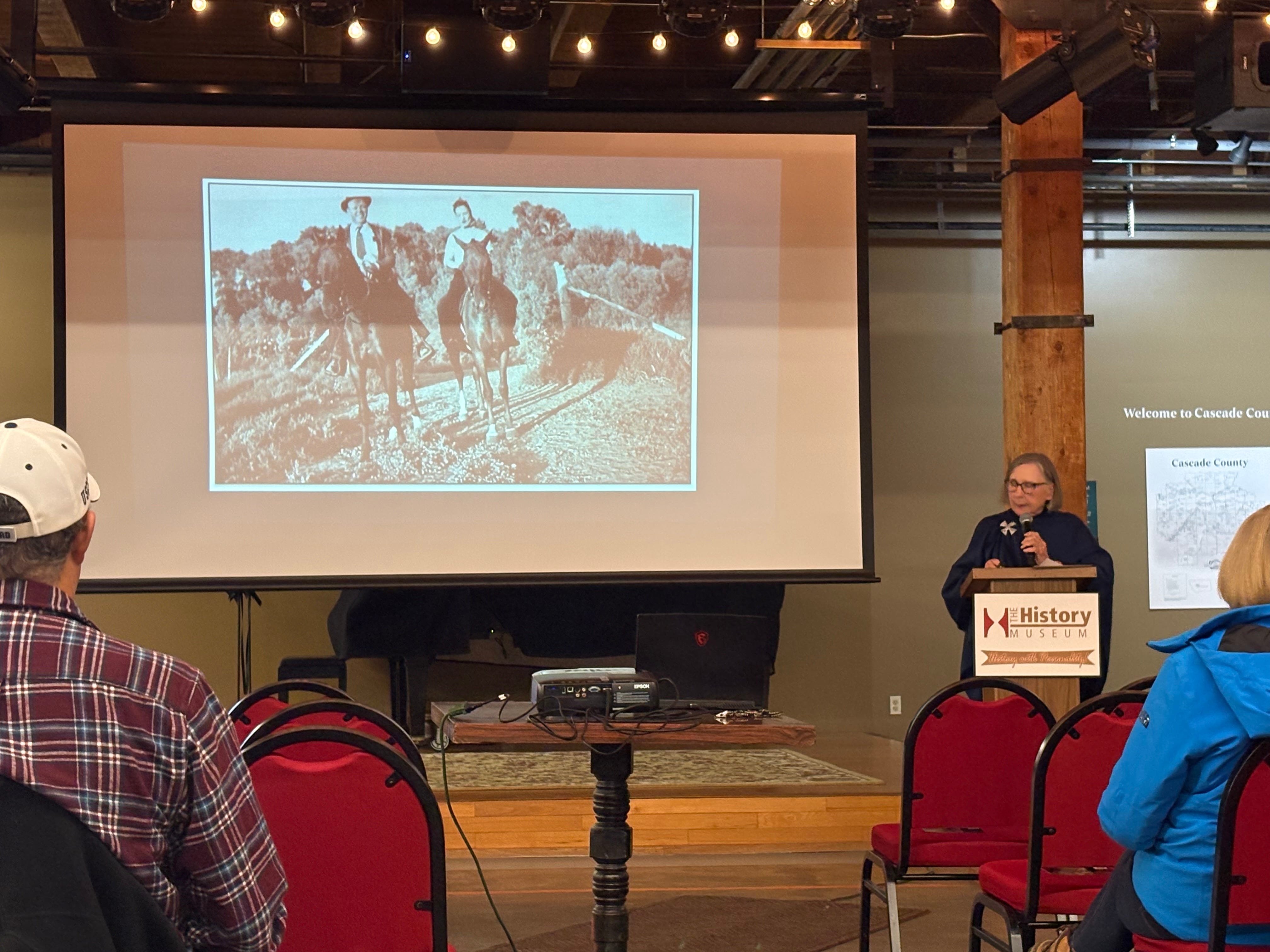
The room was full of people from her past, and from mine. I saw men and women who in my youth I looked up to. Now they looked up to me. Asked me for my business card. The man who introduced her was Peter Jennings. Twenty years ago he interned for my mother. Today he is a small businessman, the owner of the Celtic Cowboy, and president of the Cascade County Historical Society. My mother used to be the director of that same Historical Society, and she was instrumental in getting the new building we were all standing in. So the former intern introduced the former director, in the building she helped them get.
Bird Creek is a small tributary in Montana feeding the Missouri River, but it lies at the center of so many generations of my family. Crossing Bird Creek is about the new American West. It is also about crossing from one state to another, and I don’t mean state as in a political entity. I mean a state of knowing, a move from one way of understanding the world to another. And it is about all of us taking one more step. My mother calls it Next Year Country, a place where we can see the potential of a new way of being.
My mother is in her 70s, at a point when most people have stopped starting things. She has not stopped. She still manages the family ranch. She pushed this book through to publication, which anyone who has tried knows is its own long campaign. She started it 25 years ago. If I had to pick one word for her, it would be indefatigable.
We spend a lot of time, in business and out of it, talking about what youth brings. Young people bring energy, fresh eyes, and a willingness to try things nobody has told them are impossible. That is real, and it is important. Yet, we also have a habit of talking about people past a certain age as though the time has passed them by, as though their work is all behind them and what remains is the looking back.
The photograph argues otherwise. Her parents are on the wall, from a Montana of eighty or ninety years ago. I’m behind the camera, nominally the next generation. But the person in the middle of the frame, the one actually doing something new, is the woman in her 70s holding her first book. She’s here now. She’s doing her thing.
The chance to begin again is always there. If you have told yourself it’s too late to start the thing (the degree, the business, the book, the move), she is the counterexample.
So when do we decide someone’s time has passed? Watching my mother, I’m not sure we ever get to. She has a few more manuscripts sitting in the pile, in various stages. She’s not done, and neither should we be.
Buy the book here: UNP | Amazon